There comes a point every autumn when I’m overcome by an irresistible urge to cut everything down and clear it away: it’s good to let plants have their last hurrah, but after two named storms, my garden is looking decidedly tired and tatty. In this guide, I identify ten plants you should prune before the first frosts and eight you should spare for now. As an added bonus, I suggest the best tools for taming each plant and offer tips on creative ways to dispose of the prunings.
Lush summer growth can quickly become a nuisance as autumn weather deteriorates. High winds can damage foliage-laden structures, while overhanging branches and top-heavy perennials can topple, blocking paths and shedding leaves that make surfaces slippery. Gales can also shift plants in the soil, harming them over the long term.
When the autumnal exuberance becomes egregious, it’s time to sharpen your pruning tools and take control. Proceed with caution, make sure it’s safe to work, and plan where all your prunings will go — a single session can produce an awful lot of material! While you’re working, spare a thought for the myriad creatures that rely on solitary flowers, fallen foliage, and dead wood, leaving a few areas unkempt so that they can shelter.
Ten Plants to Prune in Autumn
1. Roses
The best time to prune roses is in the New Year, when you can focus on improving their shape and structure. However, excess top growth makes them vulnerable to wind rock, which can damage their roots and cause waterlogging. In autumn, you should reduce the height of roses by up to a third, removing any dead, diseased, crossing, or leggy branches in the process. This will keep them compact and make them less vulnerable to wind damage. Some roses will continue blooming until Christmas, so hold off if you can see buds forming and want them to develop. The same goes for preserving the colourful hips that many species produce.
Top tip: thorny rose prunings make an excellent squirrel deterrent. Cut them into short lengths and lay them over the surface of containers or borders newly planted with spring-flowering bulbs. With luck, the squirrels will choose to dig elsewhere.
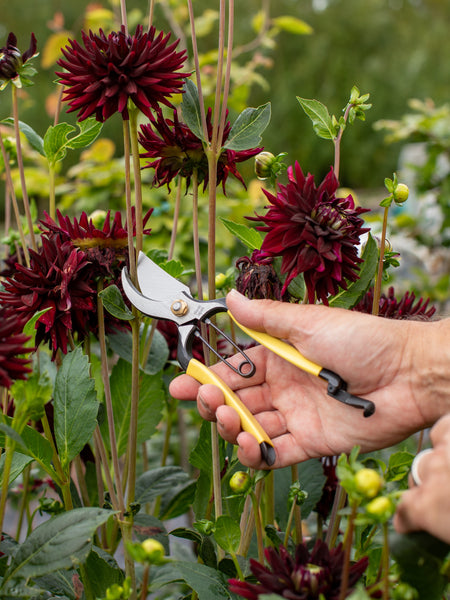
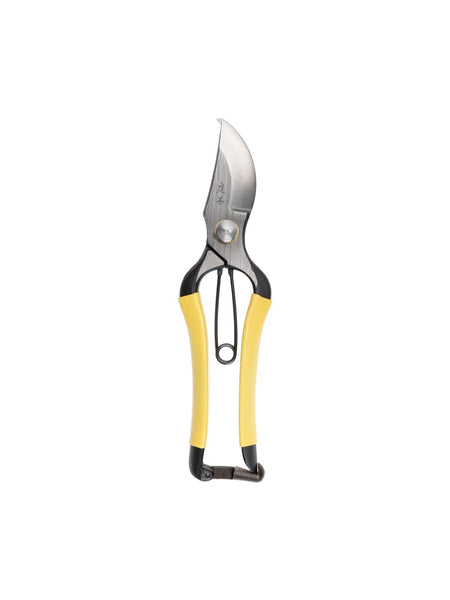
Best tools for the job: Niwaki Higurashi GR bypass secateurs for the green stuff, Original LÖWE 1.104 anvil secateurs for the dead, woody stuff.
2. Wisteria
Like roses, autumn isn’t the principal pruning season for wisteria, but if you didn’t get around to it in August, or you have re-growth that needs training, now’s the time to act. Structure is everything with wisteria, so if you have long, whippy branches flailing around or winding themselves around pipes and gutters, remove them while they are young and pliable.
Top tip: when still flexible, wisteria prunings make a perfect base for a Christmas wreath. Strip the leaves from the fresh tendrils and weave them into a circle using a round object, like a bucket, as a former; tuck the ends in and use natural twine to secure any wayward stems and make a hanger. Once the wreath base is dry, it should be solid and ready to decorate with fresh or dried material.
Best tool for the job: Original LÖWE 5.107 anvil secateurs are perfectly pocket-sized and will motor through wisteria pruning at any time of year.
3. Summer Fruiting Raspberries
Remove canes that have borne fruit by cutting them at ground level, leaving only new, green canes to produce next year’s crop. Wear gloves to protect your hands from the spiny stems, and take the chance to remove any weeds that might become tangled between the canes over winter.
Top tip: run spent raspberry canes through a garden shredder to make a fine, light mulch or compost additive.
Best tools for the job: Original LÖWE loppers make repetitive pruning tasks easier on the hands and wrists and reduce bending.
4 & 5. Rosemary and Lavender
If you haven’t already shaped these shaggy Mediterranean shrubs, autumn is a good time to tame them. Trim lightly, avoiding cutting into bare wood.
Top tip: people used rosemary to decorate homes in winter long before Christianity reached our shores; if you have plenty to spare, use it to decorate wreaths, garlands, and swags, dry some for cooking, or add a few sprigs to a bottle of olive oil for flavour. If you’re entertaining at Christmas, try making colourful ice cubes using rosemary tips, fresh cranberries, kumquat slices and pomegranate seeds. Serve with a gin and tonic, or use them to elevate a glass of sparkling water.
Best tools for the job: Niwaki mini shears or Jakoti hand shears.
6 & 7. Buddleja and Lavatera
Buddleja (butterfly bush) and lavatera (tree mallow) both put on a prodigious amount of growth in a single summer and can reach 8 or 9ft tall by autumn. Once they have finished flowering, you can cut them back by roughly half to stop the wind from destabilising the base. Then, in late winter or early spring, reduce the height further to 30-50 cm to promote vigorous new growth and abundant flowers.
Top tip: if you have a buddleja or lavatera you particularly like, try propagating it from hardwood cuttings. Select vigorous, healthy shoots that grew this year and remove the soft tip. Strip off any leaves, then divide the woody portion into 15-30 cm sections, cutting just above a leaf node. Dip the lower, cut end in hormone rooting powder and plant it in a prepared bed with about a third above ground and two-thirds below. By the following autumn, you should have a healthy, well-rooted plant that can be moved to its final growing position.
Best tools for the job. Original LÖWE 10.107 anvil secateurs or Opinel No.12 pruning saw.
8. Herbaceous perennials
Whilst it's fashionable to leave herbaceous perennials standing in the winter garden, this hands-off treatment doesn’t suit all of them. Lush, leafy plants such as peonies, phlox and hostas may colour up briefly in autumn but soon turn to mush when it gets cold. Leave those with sculptural qualities and fabulous seed heads to spangle in the frost, but clear away the rest once it starts to collapse into a soggy mess.
Top tip: use shears or a shredder to chop perennial stems into fine pieces. Then add them to compost or use them as mulch to feed and protect tender plants such as dahlias.
Best tools for the job: Jakoti hand shears or Niwaki herbaceous sickle.
9. Deciduous Hedges
Hedges composed of deciduous shrubs such as beech, hornbeam, hazel, field maple, viburnum, and hawthorn may need several trims each growing season. Autumn is a good time to give hedges a final light trim, especially in formal areas where you can appreciate their crisp, clean outline throughout the winter months.
Top tip: use prunings to create a dead hedge in a wild area of your garden. This is a good way to avoid costly recycling or time-consuming shredding while creating shelter for wildlife, including insects, birds, amphibians, and mammals such as hedgehogs.
Best tools for the job: Niwaki garden shears or Niwaki Barracuda clippers.
10. Asparagus
After harvesting in spring and early summer, asparagus produces tall plumes of fern-like foliage. In autumn, this turns golden yellow, highlighting bright red berries along the stems. Sadly, the display is short-lived. Once you’ve enjoyed the spectacle, it’s time to cut the stems off at ground level and compost them.
Top tip: asparagus plants can remain productive for 20 years or more, but if they tire, or you’d like to expand your asparagus bed, you can try growing more from seed harvested in autumn. Wait for the fruits to turn red and soft before squeezing out the seeds. You can clean, dry and store them ready for sowing in spring, or pop them straight in the ground. Judging by how many pop up on my allotment, they don’t require much skill to germinate! You’ll need to wait around 3 years before getting your first harvest of tender spears, but think of the rewards thereafter.
Best tools for the job: Niwaki Mainichi secateurs.

Eight Plants to Leave Well Alone
If you’re feeling a little gung-ho after taming the first ten subjects in this article, you might want to hold your horses before rushing headlong into pruning the next eight. Many spring-flowering shrubs have already formed flower buds by the end of autumn, so if you prune these, you’ll sacrifice all or part of your spring display. Others are still actively growing and may bleed sap if cut before the first frosts. A final group of plants benefit from retaining their top growth to protect lower growing points from frost damage.
1 & 2. Camellias and Rhododendrons, including Azaleas
Blooming from Christmas until early summer, depending on the variety, these beautiful, largely evergreen shrubs form flower buds in autumn. You can distinguish which buds will produce flowers as they are generally more plump and rounded than the leaf buds. Pruning in autumn risks losing an entire year’s blooms, so keep your secateurs firmly in their holster and prune when they stop flowering in late spring or early summer.
3 & 4. Forsythia and Lilac
In common with camellias and rhododendrons, both of these iconic spring-flowering shrubs are ready and waiting to bloom by the close of the year. What you can do in autumn is remove any long, suckering shoots that have emerged from the base of the plant. Tear the suckers away rather than cut them, so you remove other dormant basal buds with the stem. You may need to scrape soil away from the base of the plant to reveal the point of origin on the root, which is the best place to tear from.
5. Dogwoods
Dogwoods (Cornus spp., including C. alba, C. sanguinea and C. sericea) are prized for producing clumps of brightly coloured stems that illuminate the winter garden. They are relatively dull shrubs for the rest of the year, so don’t cut them off in their prime and sit on your secateurs until early spring.
6 & 7. Acers and Birches
You should only prune acers and birches when fully dormant, between November and February. Pruning while leaves are still dropping or the tree is entering dormancy can trigger unwanted late growth, especially during a mild spell, or cause the tree to bleed sap. If you spot any of the ‘Three Ds’—dead, damaged or diseased wood — you can tackle that, but stash your saw until winter arrives.
8. Hydrangeas
These hugely popular shrubs come in various shapes and sizes, but they all share large flower heads that tend to dry on the plant and remain intact over winter. Traditionally, gardeners leave the flower heads in place until late winter or early spring to protect the leaf buds sheltered beneath. In colder regions, exposed places and during especially chilly winters, this is probably a sensible precaution, particularly for mop-head hydrangeas (Hydrangea macrophylla), which are more frost-sensitive. Picking a few stems to decorate your home shouldn't harm the plant.
Other articles you might enjoy
-
Simple Winter Pruning
-
How to Maintain Garden Tools
-
Why Evergreen Foliage Turns Red in Winter
-
How to Prepare Your Garden for Winter
-
Five Ways to Use Fallen Leaves in Your Garden