When plants take root in gaps between your garden paving, you'll either be overjoyed or utterly dismayed. Some of us strive for the softening effect of gently encroaching wildflowers, whilst others watch in horror as weeds spread like wildfire, making our homes look scruffy and blocking access to doors and pathways.
At their most destructive, aggressive weeds can cause paving to loosen and heave, resulting in uneven surfaces and trip hazards. At their most pleasing, a few choice interlopers can lend a garden a sense of establishment and casual romanticism. In this article, I'm going to look at crevice colonisers from both angles, offering tips on removing unwanted weeds from paved areas and suggesting some plants you might want to encourage.
Unwelcome Visitors
Paved areas are, by definition, spaces we plan to keep clear, so that pedestrians and vehicles can use them freely. Clear, or 'negative' space is also important for creating a sense of calm and order between densely planted areas. However, that doesn't mean that plants have to be completely excluded from it. Chosen widely, a few strays can help pull the whole scene together while also creating a unique wildlife habitat. When the strays are plants we welcome, it's just a case of editing, but when they're not, we consider them weeds.

Weeds are tenacious plants, and they like nothing better than taking up residence in the gaps between paving slabs and brick pathways. When they're annuals, like corn poppies, they're not much trouble, but perennial weeds are frequently thugs that will run and run until every gap is occupied.
Weeds always seek a firm, secure foothold that allows them to grow unhindered. The narrow gaps between paving stones and block paving provide the perfect environment. Weed seeds will germinate freely in the free-draining sand or crumbly mortar between bricks and slabs. When it rains, they harness the water as it drains away. Their roots grow down, anchoring the plant in place so it can't be toppled before spreading out to access moisture locked beneath the paved surface. It's a fantastic survival strategy for the plant, but frustrating for gardeners who like crisp edges and a neat appearance.
If weeds in your paving are not your thing, then prevention is always better than cure. Keep your patios, paths and drives well maintained by periodically renewing the mortar between the joints. If they're filled with sand or other loose material, regularly use a stiff brush to knock back emerging seedlings and fill any gaps with fresh, kiln-dried sand. Perfectionists may choose to apply a specialist block paving sealer to lock the sand in place and prevent future wind-borne seeds from germinating. These treatments do not prevent water from draining away, but they bind the sand together so it's less likely to wash out.

Weed seeds can arrive in your garden from anywhere, on the wind, in bird droppings and on the soles of your shoes. Even dogs and postmen can be unwitting seed spreaders! Stopping weeds from arriving is futile. It's best to deal with an infestation as quickly as possible, ideally when they're small and certainly before they set seed. Some annual weeds have very short lifecycles, germinating, growing, flowering and setting seed within 4-6 weeks, so you need to catch them young. The adage 'one year's seeds, seven years' weeds' may not be 100% accurate, but it's not far off!
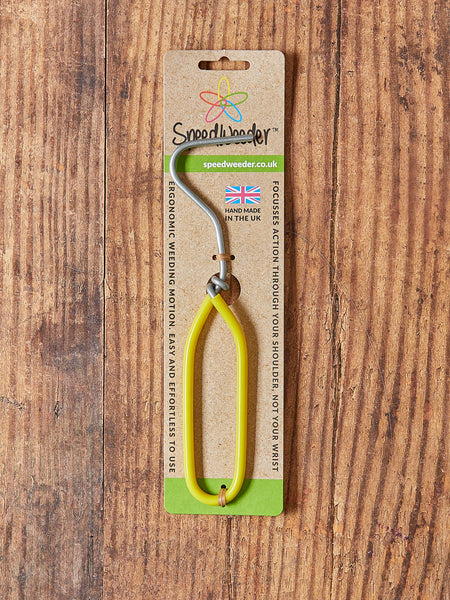
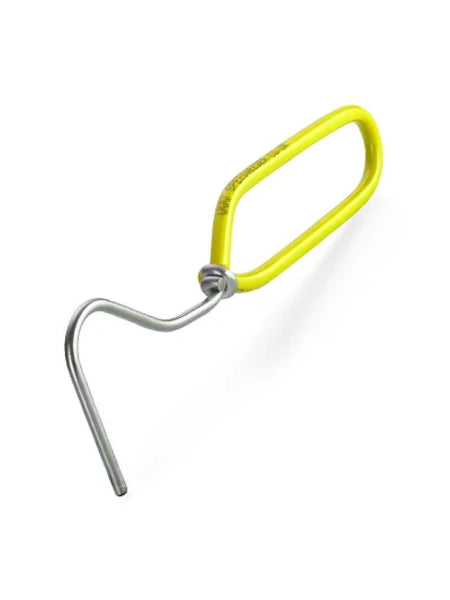
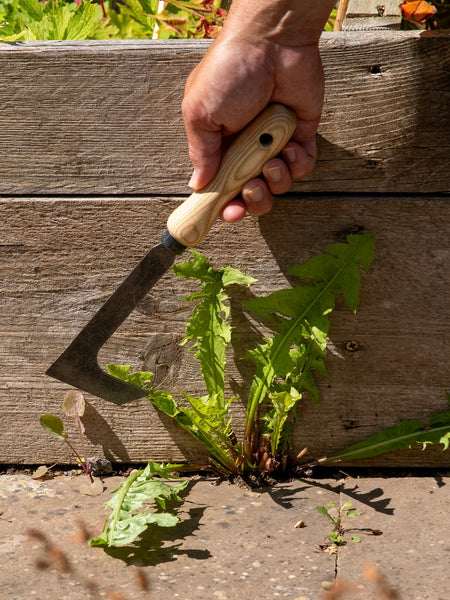
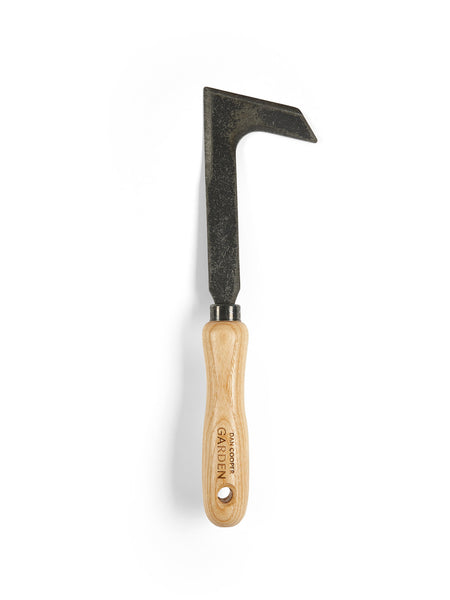
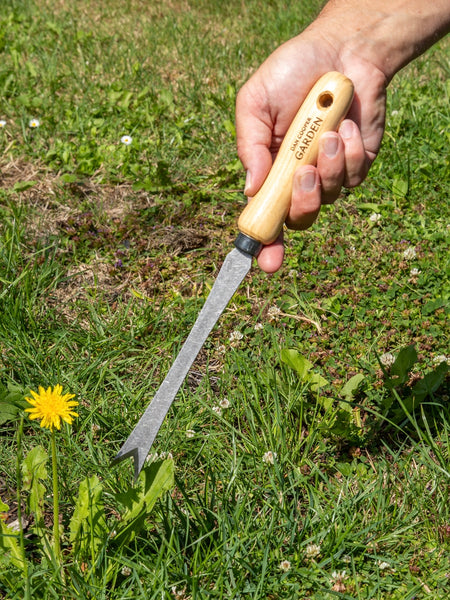
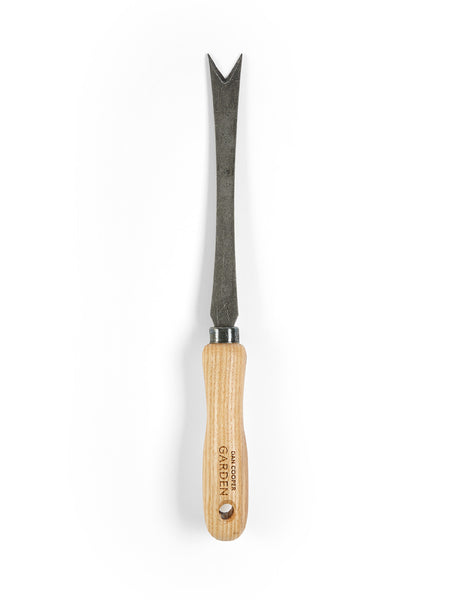
Weeds such as groundsel, hairy bittercress and grasses have fine, fibrous roots and can be pulled out with a sharp tug. They may take a wedge of sand or mortar with them, so that must be replaced. It's plants such as dandelions, docks, ground elder, thistles, lesser bindweed and couch grass that give garden owners the biggest headache. They produce deep or wandering root systems that can regenerate from the tiniest root fragment left in the ground. Thistles can even burst through tarmac. My advice is to hook them out using a lightweight Speedweeder or my Signature Crack & Crevice Weeder, which is forged from toughened steel so that it won't bend or break. Then, very carefully pour boiling water into the gap to effectively cook any roots and seeds that remain. If weeds are well established, you might have to repeat this process a few times to get them under control. Other tools you can use are a Japanese knife, known as a Hori Hori, or a kitchen knife. Take extra care when using these tools as they are sharp. Abrupt contact with hard surfaces may also damage their blades.

A flame gun can also be used to burn off weed foliage, but you'll still have to get the roots out somehow. Jet washing is another option, but this is only advisable if you have solid joints between your paving stones. There's a high risk that you'll loosen any material in the joints, drive seeds into the gaps and water them in the process!
I am not in favour of using chemicals in my garden, but of course, there are weed-killing treatments available if you wish to use them. Used infrequently, responsibly and strictly in accordance with the manufacturer's instructions, you can minimise the amount of harm that might be caused to wildlife or neighbouring plants. Some weedkillers harness naturally occurring chemicals such as acetic or pelargonic acid that are relatively harmless to animals and children when dry. However, they are indiscriminate, so if they drift or run onto neighbouring plants, they will harm them too. Always apply chemicals on a dry, sunny, still day and use a sheet of cardboard as a shield to stop sprays carrying onto beds and borders. Wear gloves, a face mask, and goggles to protect yourself from spray drift and inhalation. I do not recommend using salt to kill weeds, as that dissolves in water and can increase salinity in the soil beyond the area you're treating. If you need a rapid result or the situation is seriously out of control, chemicals offer you the chance of a quick reset, but follow them by laying a weed-proof membrane or sealing your paving so that it's a one-off event.

Plants to encourage
Whilst weeds in your paving can appear unsightly, there is a case for allowing selected plants to colonise less-trodden areas. Cultivating a frothy fringe of Mexican fleabane (Erigeron karvinskianus) is a lovely way to soften steps. Purple-top vervain (Verbena bonariensis), Transylvanian scabious (Cephalaria transylvatica), evening primrose (Oenothera biennis) and wild carrot (Daucus carota) are delightfully casual and airy, rising gracefully between stone slabs. Our native primrose (Primula vulgaris) and Welsh poppy (Papaver cambricum) grow very happily in paving, particularly in the damp Western counties, whilst stonecrop (Sedum acre), creeping wild thyme (Thymus serpyllum) and leopard-spotted hawkweed (Hieracium spilopaeum) flourish in drier situations. Relaxing your regime a little can transform infrequently used paved areas into a haven for butterflies, hoverflies and ground-nesting bees.
If you prefer green, have a shady space or want to soften paving that's occasionally walked on, mosses are a good option and will often find gaps naturally. Mind-your-own-business (Soleirolia soleirolii), typically sold as a terrarium plant, will flow along cracks and crevices, creating glittering rivulets of emerald green. If it gets out of hand, excess growth can easily be torn up, but will regrow from the roots. For drama between pale slabs and bricks, seek out a plant called brass buttons (Leptinella squalida 'Platt's Black'). A little sunshine will strengthen the bronze tint that flushes its fern-like foliage.
Finally, where you can tolerate a bit more volume, perhaps where paving meets a wall, two more cracking crevice fillers are yellow-leaved creeping Jenny (Lysimachia nummularia), often sold as a hanging basket plant, and my favourite, the wall bell flower (Campanula portenschlagiana), which produces low mounds of purple-blue flowers in summer.
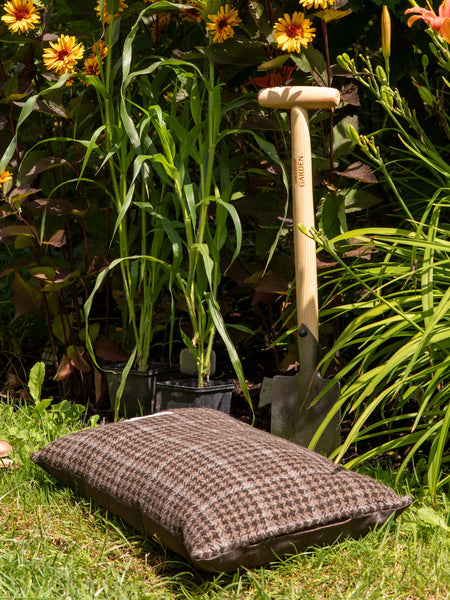
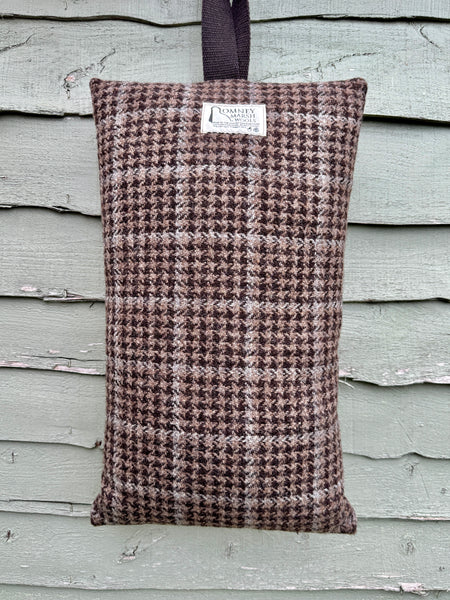
With either approach to plants in paving, the important thing to remember is that once they've crept in and made themselves at home, they are hard to get rid of. Keep on top of emerging seedlings and ruthlessly remove or edit so that they don't get out of control. If that fails, equip yourself with a well-made crevice weeder and a plump garden kneeler and oik them out as promptly as possible - should your knees not allow, this is the kind of chore that can be delegated to a paid helper, whether that be a gardener or grandchild. Just be clear which plants to remove and which to leave unharmed!