Chillies are prized for the heat and flavour they bring to cuisines all over the world. There are thousands of different varieties, from towering giants with fruits that will blow your head off, to tiny tots that will flourish on your kitchen windowsill and bring gentle heat to your cooking. I wanted to find out how to grow my own, so I consulted the expert, Clare Kennett of Clare’s Chillies in Sussex. Here’s what she had to say:
Dan - ‘Clare, I know chillies are addictive, but how did you first get interested in them?”
Clare - “Back in the 80s, I was living in Australia’s Gold Coast Hinterland, house-sitting on a farm that was awaiting sale. I was the quintessential young English traveller and had never really eaten a chilli - this was a bit of a joke to my Aussie mates. We ate out often, and at one of our favourite Indonesian restaurants, the owner encouraged me to grow some. She gave me some seeds, and thanks to the wonderful climate for growing in Southeast Queensland, it was very easy to get started. The chillies looked amazing, and that was it, hooked!”
Dan - “What are the origins of chillies? Where do they come from originally?”
Clare - “Chillies originated in present-day Brazil and Bolivia. The oldest known specimen, a single intact pod, dates from around 6,500B.C. It was found in a cave in coastal Peru. The earliest evidence of chillies in our diet was found in 6,000-year-old human remains in Mexico.”
Dan - “They’ve been around a long time then! Have chillies always been hot, or is that a trait humans have developed through breeding?”
Clare - “It’s evolved. Capsaicin - the compound that we experience as hot - is the chilli’s defence mechanism. It’s in its highest concentration in the thin membrane between the flesh and the seeds. Capsaicin suppresses a fungal disease caused by insects, so that viable seeds can be ingested and distributed by birds. Birds don’t have the same receptors that mammals have, so they don’t experience the scolding and burning sensation we do. More recently, there has been a lot of breeding to create super-hot chillies, but also varieties with more flavour, different coloured fruits and shorter growing seasons - that’s helpful for the cool British climate.”

Dan - “How is chilli heat measured? Can you give me some examples of where well-known chillies feature on the scale?
Clare - “A chilli’s heat is a score of Scoville Heat Units (SHU for short). The scale starts at 0 and goes up into the millions. The famous ‘Jalapeno’ measures roughly 5,000 to 8,000 SHU, which is a lovely mild heat. Another chilli many gardeners will be familiar with is “Apache F1”, which comes in around 60,000 SHU - that’s considered hot by many people. Also well-known are Scotch Bonnets, which are in the Habanero family. They score around 250,000 SHU. If that’s too much heat for you, some amazing Chinese varieties still have that sweet fruity flavour, but without that kick. Then there are the Super Hot Chillies, many of which are record breakers. The ‘Dorset Naga’ averages around 1,200,000 SHU: ‘Ghost’ or ‘Bhut Jolokia’ scores around the same. Then along came Ed Currie, who bred a chilli called ‘Carolina Reaper’ which registers at just over 2,000,000 SHU. Now he’s developed the ‘Pepper X’ at approx. 2,600,000 SHU. He’s not released seeds yet, so if you've seen any for sale, they're fake!”
Dan - “I think I’ll stick with Jalapenos, thanks you very much! What’s a comfortable range for you? Do you prefer the milder ones, or can you take the heat?”
Clare - “I love flavour as well as heat, so Habaneros are my favourite. They have a really punchy, fruity flavour. A Chocolate Habanero comes in at around 600,000 SHU, so I've
tried the flesh but not the membrane. I’m not that brave! I grow ‘Purple Reaper’ and ‘Carolina Reaper’, as a few customers do request them, probably more as a bet, to be honest! My real faves are the ‘Aji Norteno’, ‘Peach Habanero’ & 2 fabulous Thai chillies – ‘Prik Sod’ & ‘Prik Kee Noo, which have that wonderful Asian flavour and heat.
Dan- “I’m asking for a friend - do you have any tips for someone who has overdone it, or perhaps wiped their eye with hands that have touched chillies?”
Clare - “Ha ha! They won’t have been the first, and they won’t be the last, Dan! Capsaicin is fat-soluble, so simple handwashing doesn’t help much! Use gloves if you’re sensitive, but after I've been working with raw, open pods, I rub some hand cream or oil over my hands and THEN wash them in hot, soapy water. The oils help carry the capsaicin away. If your friend has eaten too hot a chilli, a fat-based remedy such as yoghurt is needed. I don’t drink dairy milk, so I always have some coconut or almond milk handy when I’m cooking or testing new recipes.”

Dan - “Great tip! When is the optimum time to start growing chillies from seed?”
Clare - “Provided you have grow lights, you can sow them in early January or February. Windowsill light levels are not high enough until March and April, and remember, you will need to keep the young plants happy till they can go outside. Where I am in Sussex, that could be as late as mid-May. Varieties of Capsicum annuum grow the quickest, and you can still have a go at sowing in April as long as you use a heated propagator. Heat & humidity are essential for germination. A classic Cayenne chilli, or a more unusual yellow Cayenne variety such as ‘Kristian’, might be a good idea. ‘Padron’ and ‘Jalapeno’ chillies are very easy for beginners too.”
Dan - “Talk us through the process? Should I cover the seed? What compost should I use?”
Clare - “Soak the seeds overnight before sowing. I use chamomile tea for its antimicrobial properties. As I grow so many plants, I fill rectangular potting strips with damp compost to make them easier to prick out. Lay the seeds on the surface of the compost and cover them with 5mm of something like vermiculite, which I’m currently using up and will switch to more sustainable cork granules in future. If you're growing two or more varieties, be sure to label them clearly. Place the trays or pots onto a heat mat & cover. I use zip-lock bags to keep the moisture in. Germination is always 99%, and most varieties are up in about 7 days.
Once the first seed has sprouted, remove the pot or tray from the heat mat, but still keep it warm & moist: the other seeds will have started & those little roots can burn/dry out quickly. Water only from the base, and start feeding with a dilute feed when the first set of true leaves appears.
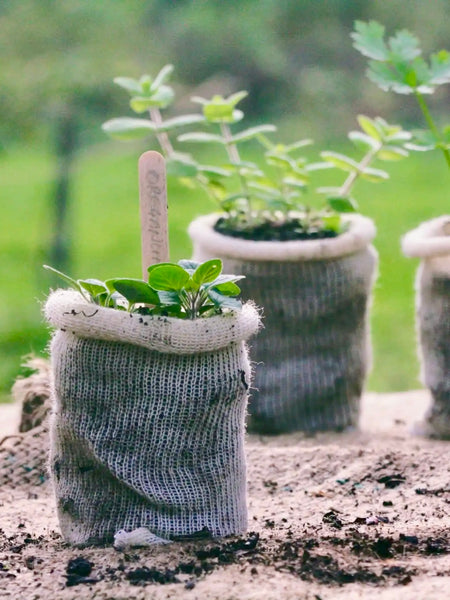
Once the second set of true leaves appears, prick the seedling out into cells or small 2” pots filled with a free-draining, peat-free compost. When white roots are poking out of the bottom, it's time to pot on to 3” or 5” pots, depending on the variety’s needs. Then, gradually go up a pot size when you see roots emerging from the base - don’t plonk them straight into a large pot, as they’ll hate that and might damp off.”
Dan - “Once my chilli plants are established, can I plant them outside, or do they need to be kept in a greenhouse all the time?”
Clare - “Chillies must be hardened off before they’re put outside. As soon as light levels and warmth are right, usually in mid to late April, you can start the in/out chilli dance. Put them outside in a sheltered spot for an hour a day to begin with, increasing by thirty minutes daily. Watch out for wind & rain, which can damage the vulnerable plants. Too much sun will scorch young leaves, so place them in shade on bright days.
All chillies love a humid greenhouse, polytunnel or conservatory, especially the heat-loving Capsicum chinense varieties, which include Scotch Bonnets, Habaneros & most Caribbean varieties. These can be planted in the ground if they’re under cover. Once hardened off, all Capsicum annuum & C. baccatum varieties will be happy in a sunny, sheltered spot in the garden. I tend to keep them in pots, so I can move them if storms, cold nights or heavy rain are forecast. Be aware of the wind too: large unstaked plants can easily snap or blow over. Some smaller Capsicum annuum varieties are fine indoors & some are bred specifically for a bright, south-facing window.”
Dan - “When should I expect to pick my first fruit? How do I even know the fruits are ready?”
Clare - “From pricking out to picking fruit can be as short as 60 days for Capsicum annuum varieties or 120 days for Capsicum chinense. You can eat chillies when they're under-ripe, but I always suggest waiting until they’re fully ripe for the best flavour. The colour & firm feel should tell you when they’re ready to pick. If they start to soften, it’s time to harvest. Always pick chillies immediately they're ripe, as leaving them on the plant to dry will trigger the plant to stop producing flowers and your supply of chillies will dry up.”

Dan - “How about watering and feeding? Do I treat them the same as tomatoes, or slightly differently?”
Clare - “Water your chillies when the first inch of compost is dry. Test the pot's weight when it’s been watered, and judge by that. I bottom-water/feed when needed and never let them sit in water for too long. Chillies hate being cold AND wet. Reducing watering in autumn forces the plant to stop producing leaves and focus on developing pods, but I don’t do that. I place a ripe banana next to my chillies, which speeds up ripening without stressing the plant.”
Dan - “At the end of the growing season, can I collect seed from varieties I really love? What’s the best way to go about it?”
Clare - “You can!. As soon as the pod’s ripe, slice it open vertically, scrape out the seeds, and gently remove any membrane that comes with them. Leave the seeds somewhere dry and open, where they won't be disturbed or knocked over, and be sure to label them. Allow about three weeks for them to dry out completely, then store them in sealed containers in the fridge with some rice grains to absorb condensation. Check your seeds regularly and throw away any with a darkened centre as these won’t germinate. With Cayenne-type peppers, you can dry the whole pod, and they’ll store for a few years. Using gloves, snip the stalk end off, turn the chilli upside down & gently roll it between your fingers - the seeds will fall out easily.
Remember that F1 varieties are unlikely to come true from seed, but you might end up growing something unique!”

Dan - “What are your top four chilli growing tips?”
Clare - “Now you’re asking!
- A chilli’s heat will not be evident if you bite the end to check! Capsaicin is embedded in the inner membrane to which the seeds are attached, so that’s where the heat is. Removing the seeds only won’t remove the heat.
- Treat a chilli as you would like to be treated. We hate standing in the cold & wet, and being buffeted by the wind. We love the sun but need protection in varying degrees. Chillies are just the same.
- To avoid bud drop during a heatwave, damp down (spray) the sides and floor of your greenhouse or polytunnel to increase humidity. Water only in the morning and open doors and windows to improve ventilation. A gentle breeze is good!
- Catch aphids before they run amok! The danger period is when the plants are under glass, before predators such as hoverflies and ladybirds arrive. Aphids shed their skins as they grow, so check daily for these little white flakes. Wash the aphids off gently and use a non-toxic pest controller, such as SB Invigorator, if they’re getting out of hand.”
Dan - “Your nursery is down in Sussex - can you describe your set-up?”
Clare - “My nursery is my pride and joy. It’s set up in my south-facing rural garden, with 2 greenhouses and 2 polytunnels. I usually grow 45-50 varieties, so I can’t grow everything at the same time. It’s a balancing act to ensure I have plants ready for all the events I go to. I’m as sustainable as I can be with countless water butts, and I never buy new pots. There are millions of disused pots in sheds up & down the land, so I re-use donated pots. 3” pots are the ones I use the most.”
Dan - “What’s a typical day like for you?”
Clare - “April/May is my busiest time. I put in a lot of steps performing the in/out chilli dance! I am pricking out and potting on most days. Luckily, I have 2 students who come for a week’s work experience in May. They have a great time, learn a lot, and I get some help!”

Dan - “You sell your plants at plant fairs and farmers' markets in Sussex and Kent. How important are those outlets for you?”
Clare - “As I don’t have a nursery that’s open to the public, plant fairs & my selected markets are critical for my business. At in-person events, customers get to pick my brains and see the plants in real life - photos online can be misleading. The Plant Fairs Roadshow is really life-changing for micro-nurseries like mine. The support from other nurseries in this cooperative is really something special. I’m a sole trader, but I’m also part of a larger support network that can connect me with wonderful customers in amazing spaces!”
Dan - “Which are your best-selling varieties when you’re out and about?”
Clare - “I’m always asked for ‘Jalapeno’, ‘Apache F1’ & ‘Padron’, which I do grow. I try hard to curate a really wide range of varieties in all five domesticated species, so people can try something new and be adventurous - chillies are meant to be fun and exciting to grow. Of course, what I recommend depends on where the plant will be grown & how much space is available. Some great compact varieties are happy on a windowsill, while Capsicum chinense plants prefer a greenhouse or polytunnel. The famous ‘Dorset Naga’, bred by the brilliant Joy Michaud from Sea Spring Seeds, can reach 6 feet or more in a greenhouse or polytunnel!”
A beautiful variety I encourage customers to consider is ‘Blue Christmas’ - it’s a stunning Capsicum annuum variety, forming conical plants with purplish foliage and vibrant, multi-colored pods that look like old-fashioned Christmas lights. It’s the full festive package!

If someone were to ask me for two or three varieties that cover most culinary needs, I’d recommend the Aji’s, which are Capsicum baccatum species - these are very easy to grow and can tolerate cooler weather. ‘Aji Norteno’ is very crunchy and has an apple aftertaste. No kitchen should be without a Thai plant, so I cook with ‘Prik Sod’ & ‘Prik Kee Noo’. They all overwinter really well so that’s a bonus!”
Dan - “What’s next for Clare’s Chillies? Are you happy as you are, or do you have plans to take the chilli world by storm?”
Clare - “I’m very happy as I am! I can't really expand space-wise, as that would involve moving or renting, and I would need to hire someone to help me. I just love the plant fairs & markets at weekends from May to September. I do a fair few talks at gardening & horticultural clubs during the week, which I love, and I'm building up that side of my business. The vibe is so warm & welcoming, and talking directly to customers is probably the best bit. Many people are scared of growing or eating chillies, so I love being able to put them at ease & expand their chilli horizons! I’ve recently started donating seeds to a schools program to encourage little ones to grow their own. I’d love to work more closely with schools in future - let’s see!
Dan - “How can people find out more and connect with you?”
Clare - “I have Facebook & Instagram pages from where people can message or WhatsApp me. I’ve just started a newsletter, too: those who wish to avoid social media can email me at hello@clareschillies.co.uk to join my mailing list.