Sustainability has been a hot topic among gardeners for many years. Most of us understand the basic changes we need to make, even if we don’t always achieve them. My message is clear - it's better to take small steps in the right direction than to do nothing at all.
Private gardens in the UK cover approximately 500,000 hectares, accounting for around 5% of the UK's land area. If you add other cultivated green spaces to that - allotments, parks and playing fields - the figure doubles to 10%, covering a space three times larger than all the UK's National Nature Reserves combined. Hence, what we do in our gardens and on our allotments can really make a difference to nature, the environment, our health and the wellbeing of our local communities.
In a series of articles, which I have titled Sustainable Gardening 101, I will break down key sustainability topics, outlining simple actions you can take, and suggesting products to support your endeavours. Let's begin with water conservation.

Cranesbills, Mexican fleabane and buddleia enjoy the poor, stony soil in this gabion wall.
Why conserving water matters
Britain's water supply is under intense pressure due to climate change, ageing infrastructure, population growth, a shortage of new reservoirs and increasing urbanisation. Rising demand and shrinking availability create a pincer-like movement, meaning England alone could face a daily shortfall of 5 billion litres - equivalent to one-third of the current supply - by 2025. Hotter, drier summers have already increased water loss through evaporation and elevated water demand for gardens and farming. When it does rain, it's harder for the ground to absorb moisture, and when it falls in heavy bursts, the water tends to end up exactly where we don't want it and where we can't use it.
Gardens account for roughly 6% of household water use annually. This can spike at 50% during hot, dry weather; that’s 1,350 litres of water per week, equivalent to 6 large wheelie bins filled to the brim! Now that most households are metered, watering a garden could be considered a luxury, and we should all think twice before plugging in our hoses.
Fortunately, there are many simple ways to reduce water consumption in our gardens. There's no need to do them all, but taking a few small steps can make a big difference.

This attractive cuboid dipping tank is a feature in its own right, storing water in the heart of the garden.
Actions to help conserve water
- Installing a water butt to harvest rainwater - water butts can be used to collect water from all sorts of buildings, including sheds, summerhouses and conservatories. If you don’t like the look of plastic water butts (and I’m with you on that!), then there are alternatives made from wooden barrels or even terracotta. I prefer the aesthetic of a metal dipping tank: these sit below a downpipe and are refilled whenever it rains, typically with an overflow that leads to a drain or a designated 'damp patch' that can be planted with moisture-loving plants. Whether purpose-built or vintage, you can plant a dipping tank like a pond and use it to fill a watering can simply by plunging it in.
- Conditioning plants to be less needy - as a nation with a long tradition of gardening, we tend to cosset our plants, pandering to their every need and striving to offer them the perfect conditions for growth. However, sometimes it's better to treat plants mean to keep them keen. Regular, shallow watering, such as that achieved by a sprinkler, encourages plants to develop roots close to the soil surface. When the surface dries out, they wilt; you respond by watering again, and the cycle of neediness continues. By watering thoroughly but less often, or even not watering at all, plants will send their roots deep into the soil in search of water, making them more resilient. Water-restricted plants might not grow as tall and lush as those constantly fussed over, but they’ll be tougher and less reliant on you.
- Planting densely - it might sound counterintuitive to increase the number of plants in your garden if you want to reduce water consumption, but dense planting cools and humidifies the atmosphere, dramatically reduces evaporation from the soil surface and stops weeds from growing. Water evaporates far more quickly from paved areas, lawns and bare soil, which are also hotter. It's sobering to learn that over 4.5 million front gardens now contain no plants at all, with roughly 42% of total domestic garden space now paved or built over.
- Choosing permeable surfaces - flooding in urban and suburban areas is exacerbated by impermeable surfaces such as tarmac and paving that do not absorb water. With nowhere to go, excess water runs off, often overflowing from blocked drains and entering basements and roads. By replacing paved surfaces with gravel, creating planting pockets where water can soak away, or even creating a shallow depression in a grassy area, you can slow the flow of water, and better still, keep it in your garden where your plants can benefit from it.
- Planting native and drought-tolerant species - Whatever we feel about our rather topsy-turvy weather, plants that originate from the UK are almost always the best able to cope with it: even when subjected to flooding or severe drought, they’ll generally bounce back in time. Drought-tolerant species, such as those from the Mediterranean and South Africa, are good options for well-drained sites, but they don’t always appreciate our wet winters and generally damp atmosphere.
- Allowing your lawn to go brown - grass doesn’t need watering except in the most extreme drought situations: it’s only our deeply ingrained desire to have a green lawn that drives us to water it. During prolonged periods of dry weather, avoid turning on the sprinkler and refrain from walking on the grass. After a period of rain, new growth will follow swiftly, and if any gaps do appear, they can be reseeded in autumn.
- Using a seeper hose instead of a sprinkler - perforated hoses that gently leak water in a controlled way are a great alternative to conventional sprinklers. Lay seeper hoses over the soil surface before plant growth begins in spring, and use them to irrigate after dark, when needed. In most areas, the use of seeper hoses is not prohibited in the event of a hose-pipe ban, but always check this with your water provider first. If you're a fan of technology, you can get app-controlled watering systems that measure your soil's moisture content and turn seeper hoses on and off automatically, when required.
- Mulching with gravel, bark or straw - a mulch is any material applied to the soil surface for the purpose of keeping down weeds, conserving moisture or releasing nutrients into the soil. Applied over moist soil in a 5-10 cm thick layer, mulch will lock in moisture and protect delicate surface roots from drying out. The best time to mulch is early spring or mid-late autumn.
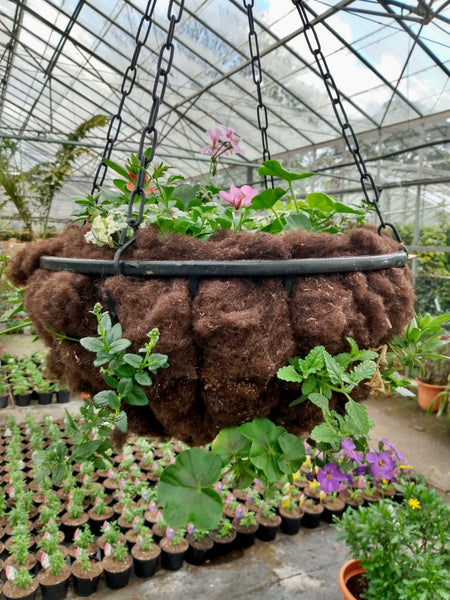
- Planting fewer pots and baskets - British gardeners have turned container gardening into an art form. Unfortunately, plants growing in pots, windowboxes and hanging baskets are totally reliant on you and need to be watered far more often than those in the ground. You cannot rely on rain, which rarely penetrates the canopy of a plant once it's established. If you can't kick the container gardening habit, you can use humus-rich compost, water-retaining crystals, wool liners or moss to conserve moisture. You can also try planting fewer, larger containers and grouping them closely together to reduce moisture loss.

This drought-tolerant garden of rock, gravel and Mediterranean plants isn't in Greece, but at Sissinghurst in Kent.
Products to help conserve moisture:
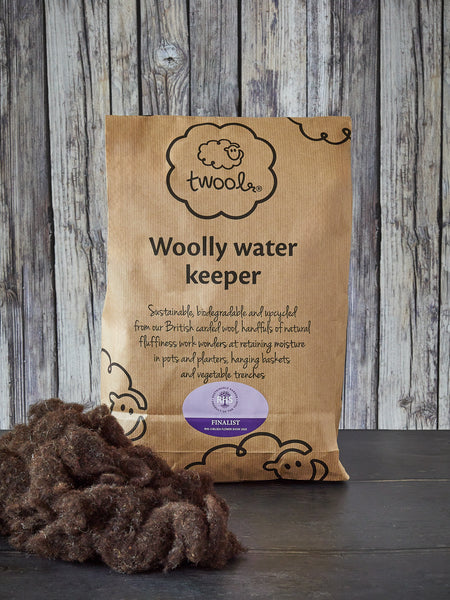
- Woolly Water Keeper - this wonderful, bitter-chocolate coloured fleece from Dartmoor sheep is perfect for lining bean trenches and hanging baskets.
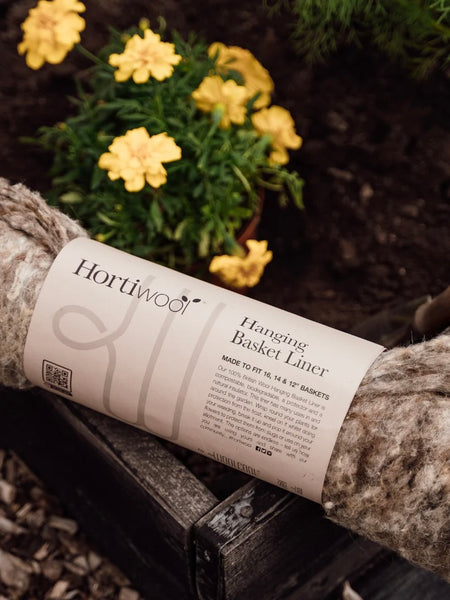
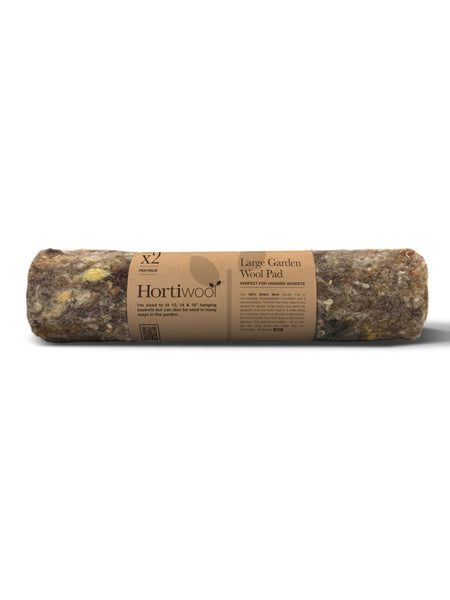
- Hortiwool Felt Pads - these felted wool sheets can be used as capillary matting, mulch or hanging basket liners. Place a piece at the bottom of every pot instead of crocks, and it will act as a moisture reservoir. Wool felt is also invaluable as a weed suppressant and peat alternative in no-dig gardening.
- Thatcher’s Mulch - this is pelletized organic straw that can be used as an attractive mulch or slug deterrent. Thatcher's mulch is ideal for laying beneath scrambling crops such as strawberries and squashes to keep the fruits clean and blemish-free.
-
Native Wildflower Seeds - native wildflower mixes are formulated to match your specific growing conditions, including dry, stony urban spaces, heavy clay and free-draining chalk. Native species have evolved to thrive in the British climate and will often be far more resilient during periods of moisture stress or flooding.